
general_pathology:infectious:infectious_diseases_53
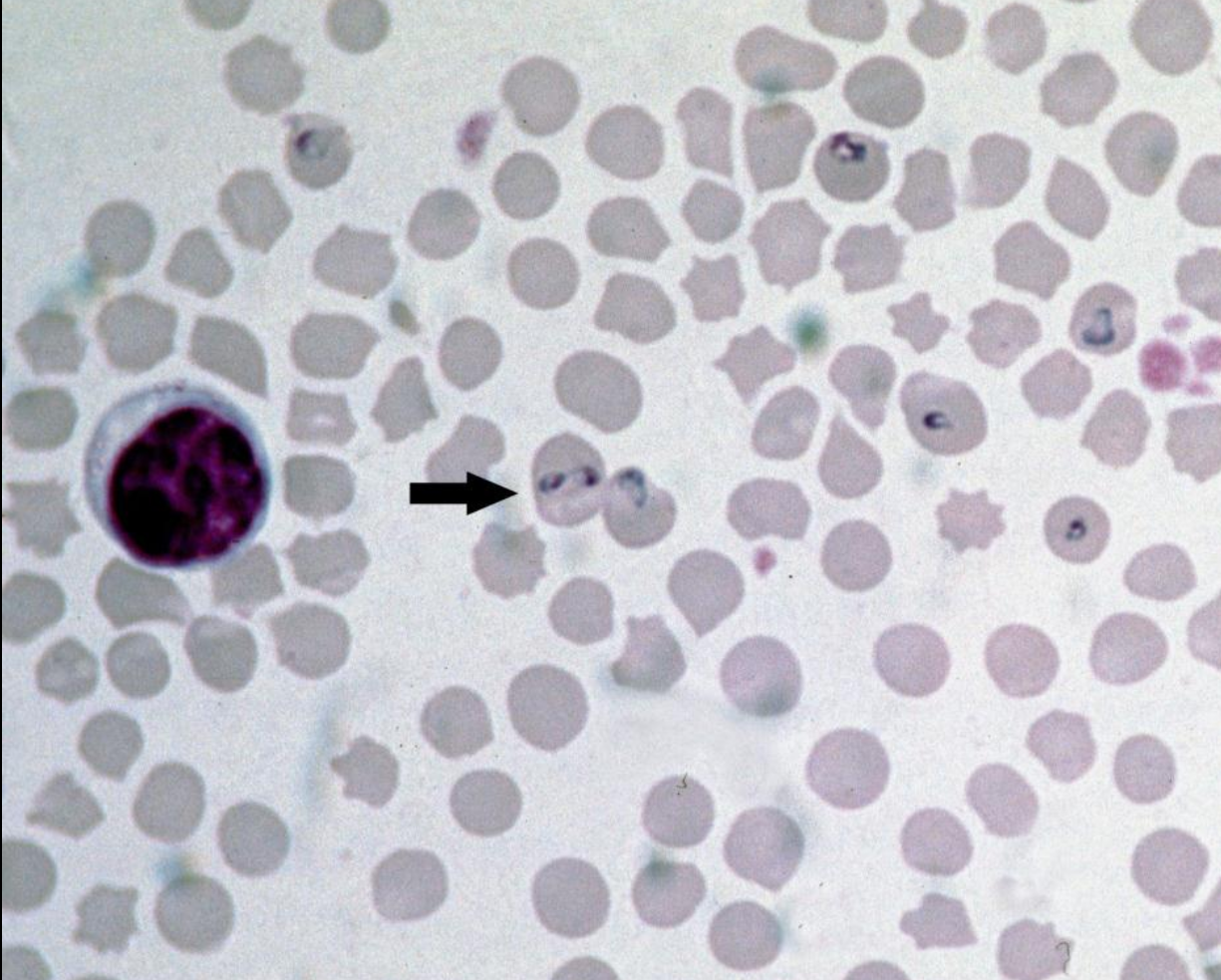
Choose the correct answer
Which of the following parasites is most likely?
”Explanation”
See: https://en.wikipedia.org/wiki/Babesia_bovis#/media/File:Babesia-bovis-piroplasms-cattle.jpg
| Blood parasite/bacteria | Target Cell | Cell location | size | Features |
|---|---|---|---|---|
| Babesia sp. | RBC | Cytoplasm | 0.5-1.5μm x 1-4μm | Single or paired. Ring forms |
| Trypanosoma sp. | Plasma | 1-3μm x 15-20μm | Elongated/spindle shaped | |
| Anaplasma sp.* | RBC | Cytoplasm | <1μm | Round |
| Ehrlichia sp. | Monocytes/neutrophils | Cytoplasm | 1-2μm | Round/oval |
| Mycoplasma sp. | RBC | Cell surface | 0.5-3μm | Round, rings or chains |
| Cytauxzoon sp. | RBCs (piroplasms) and monocytes (Schizonts) | Cytoplasm | Piroplasm 0.5-2.5μm. Schizonts 15-250μm much bigger than other leukocytes | Round/oval to pyriform |
*Anaplasma platys in dogs infects platelets. Anaplasma phagocytophilum infects granulocytes and monocytes - both of these used to be called Erhlichia.
general_pathology/infectious/infectious_diseases_53.txt · Last modified: by achamings